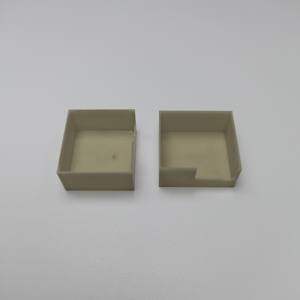
Discover Premium Ceramic Products | Durability & Elegance United | Advanced Ceramics

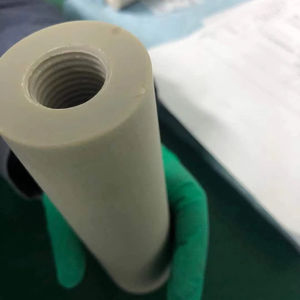
PRODUCT PARAMETERS
Description
Overview of High Thermal Conductivity Aluminum Nitride Ceramic Substrate
Aluminum Nitride Ceramic is an advanced ceramic material with aluminum nitride as the main component. It has been widely used in electronics, optics, and mechanics due to its unique properties.
Features of High Thermal Conductivity Aluminum Nitride Ceramic Substrate
High thermal conductivity: Aluminum nitride ceramics have relatively high thermal conductivity, usually between 170-260 W/m·K, which makes it an excellent heat dissipation material. It is especially suitable for electronic devices that require efficient heat dissipation, such as substrate materials for power semiconductor devices.
Good electrical insulation: Despite its high thermal conductivity, aluminum nitride ceramics are excellent insulators of electricity, which can effectively prevent current leakage and ensure the safe operation of electronic components.
Low dielectric constant and dielectric loss: These characteristics make aluminum nitride ceramics very suitable for use in high-frequency circuits because it can reduce energy loss during signal transmission.
High temperature resistance: Aluminum nitride ceramics can maintain structural stability and strength at extremely high temperatures. Its melting point is about 2800°C, so it is suitable for applications in high temperature environments.
Low thermal expansion coefficient: Compared with semiconductor materials such as silicon, aluminum nitride has a lower thermal expansion coefficient, which means it has better dimensional stability when the temperature changes, which helps improve packaging reliability.
Corrosion resistance: Aluminum nitride ceramics have good chemical stability to most molten metals and are not easily oxidized or corroded, allowing them to perform well in harsh environments.
High mechanical strength: Although not as hard as some other types of ceramic materials, aluminum nitride ceramics still provide enough mechanical strength to allow them to be used in many structural applications.
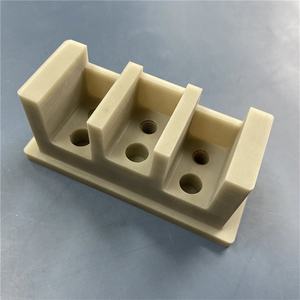
(High Thermal Conductivity Aluminum Nitride Ceramic Substrate)
Specifications of High Thermal Conductivity Aluminum Nitride Ceramic Substrate
This Light Weight Aluminum Nitride (AlN) ceramic substratum offers superior thermal administration. Its essential attribute is high thermal conductivity. We gauge this between 170 and 200 W/mK. This number is considerably far better than typical alumina porcelains. Heat steps far from hot components exceptionally quick. This prevents getting too hot and improves gadget reliability.
The material matches silicon in just how much it increases when warmed. We call this the coefficient of thermal growth (CTE). Close CTE matching is crucial. It lessens anxiety when connecting silicon chips or power devices. This stops cracking or connection failures throughout temperature changes.
Aluminum Nitride serves as a strong electrical insulator. Its electrical resistivity is extremely high. This residential or commercial property is necessary for circuits carrying power. It safely separates conductors and stops short circuits. The dielectric stamina is additionally remarkable. It withstands high voltages without damaging down.
Surface high quality matters for connecting parts. Our AlN substrates feature a very smooth surface area. Regular roughness is under 0.4 micrometers. A smooth surface area ensures solid bonds for chips and circuits. It additionally allows specific printing of conductive circuit courses.
We provide these substratums in common dimensions. Common measurements consist of 50×50 mm, 100×100 mm, and 150×150 mm. Thickness options are flexible. You can find them from 0.25 mm approximately 1.5 mm or more. We can additionally supply custom dimensions to fit details demands.
These properties make AlN ideal for demanding electronic devices. It masters high-power LED components. The substrate successfully pulls heat from the intense LED chips. It’s also best for power semiconductor product packaging. Instruments like IGBTs and MOSFETs generate substantial warmth. AlN maintains them cool and steady. Its usage reaches high-frequency RF modules as well. The material manages the warm from effective amplifiers well.
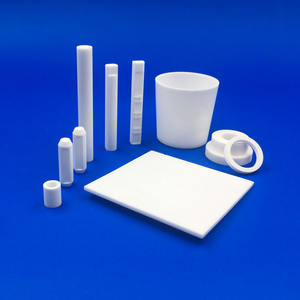
(High Thermal Conductivity Aluminum Nitride Ceramic Substrate)
Applications of High Thermal Conductivity Aluminum Nitride Ceramic Substrate
Light weight aluminum nitride ceramic substratums deal with heat exceptionally well. This residential property makes them vital in modern electronic devices. Heat administration is critical for numerous gadgets today. Elements fume throughout procedure. Too much warm triggers issues. Efficiency drops. Life expectancies shorten. Integrity experiences. Conventional products like alumina battle. Their thermal conductivity is a lot lower. Aluminum nitride moves warm away quick. This keeps sensitive components cooler. It makes sure stable procedure under demanding conditions.
These substratums provide exceptional electric insulation too. They avoid unwanted electrical currents. This is vital for security and feature. The material is very secure. It withstands chemical assault well. It handles heats without deteriorating. This stability is vital in rough atmospheres. Aluminum nitride functions accurately over long periods. It won’t split or warp conveniently under thermal stress and anxiety. This leads to longer-lasting products.
Suppliers value its compatibility with precision processes. Thin film and thick film circuits work well on it. They bond firmly to the smooth surface area. This permits complex circuit styles. Great lines and features are feasible. High-density packaging becomes possible. Room is often restricted in modern devices. Precision is crucial.
Where do we see these substrates? Power electronic devices rely on them heavily. Think electric car inverters and industrial motor drives. These systems produce extreme heat. Efficient warm elimination is non-negotiable. Aluminum nitride stands out below. High-power LED lights utilizes it. Intense LEDs generate substantial warm. Managing this warm keeps the light output strong and the life-span long. RF and microwave components need it. Secure thermal efficiency makes sure regular signal top quality. Laser diodes create concentrated warm spots. Light weight aluminum nitride spreads this warm efficiently. Advanced semiconductor packaging demands top thermal monitoring. These substratums deliver the needed performance.

Company Introduction
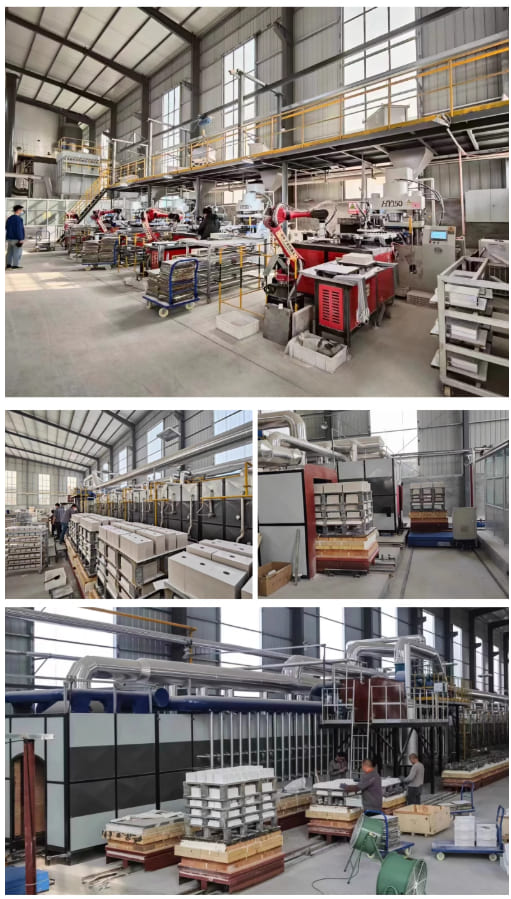
Advanced Ceramics founded on October 17, 2014, is a high-tech enterprise committed to the research and development, production, processing, sales and technical services of ceramic relative materials and products.. Since its establishment in 2014, the company has been committed to providing customers with the best products and services, and has become a leader in the industry through continuous technological innovation and strict quality management.
Our products includes but not limited to Silicon carbide ceramic products, Boron Carbide Ceramic Products, Boron Nitride Ceramic Products, Silicon Carbide Ceramic Products, Silicon Nitride Ceramic Products, Zirconium Dioxide Ceramic Products, Quartz Products, etc. Please feel free to contact us.
Payment Methods
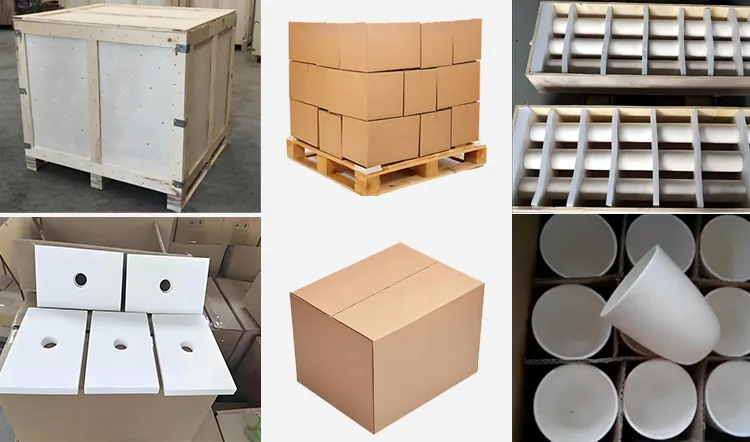
T/T, Western Union, Paypal, Credit Card etc.
Shipment Methods
By air, by sea, by express, as customers request.
5 FAQs of High Thermal Conductivity Aluminum Nitride Ceramic Substrate
What makes Aluminum Nitride special?
Aluminum Nitride ceramic stands out mainly because it moves heat away incredibly well. This material moves heat much faster than many other ceramics. It also stops electricity effectively. This combination is hard to find elsewhere. It handles high temperatures without breaking down. It stays stable even when things get very hot.
Where is this material typically used?
You find it most often in electronics needing serious heat management. Think LED lights, especially the very bright ones. Power modules for electric cars and renewable energy systems rely on it. High-power radio frequency devices use it. Semiconductor packages needing top cooling performance choose it. Any gadget generating lots of heat in a small space might need it.
Why pick AlN over regular alumina ceramic?
The big reason is heat transfer. Aluminum Nitride moves heat several times faster than alumina. Your electronic parts stay much cooler. This directly improves performance and lifespan. It prevents overheating failures. AlN also matches the expansion of silicon chips better. This reduces stress inside the package. Reliability improves significantly.
Are there downsides to Aluminum Nitride?
Yes, cost is the main issue. Making AlN substrates is more complex than alumina. This makes them more expensive. The material is also quite brittle. Careful handling is essential during assembly. Machining finished parts is difficult. Designs need careful planning. You cannot easily cut or drill it after sintering.
What sizes and shapes are available?
Suppliers usually offer standard thin flat plates or sheets. Common thicknesses range from very thin up to a few millimeters. Square or rectangular shapes are typical. Round substrates are also possible. Custom sizes and shapes can be made. This requires special tooling and higher costs. Surface finishes can be adjusted for specific bonding needs.
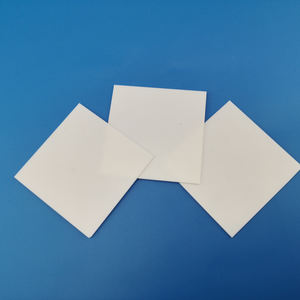
(High Thermal Conductivity Aluminum Nitride Ceramic Substrate)
REQUEST A QUOTE
RELATED PRODUCTS
Wear-Resistant Aluminum Nitride Plate for High-Temperature Applications
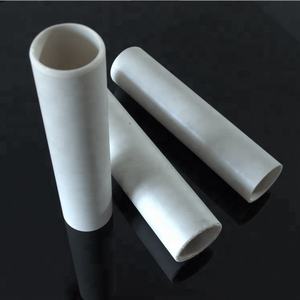
Electrical Insulation Aluminum Nitride AlN Ceramic Substrate With Surface Polishing
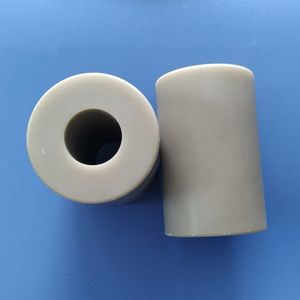
Factory Direct High Thermal Conductivity Aluminum Nitride ALN Ceramic thermal insulator for High-power Circuits
Hot Aluminum Nitride Aln Ceramic White Powder China
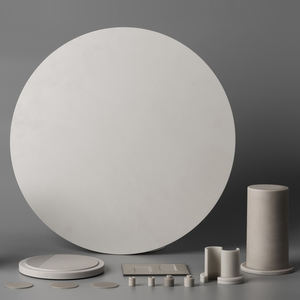
High Purity Aluminum Nitride (ALN) Powder High Thermal Conductivity Electronic Ceramic Substrate Raw Material Aluminum Nitride Aln Spherical