Discover Premium Ceramic Products | Durability & Elegance United | Advanced Ceramics

1. Introduction
When it comes to high-temperature industrial processes, few materials hold up like the silicon carbide crucible. Known for its exceptional thermal conductivity, chemical inertness, and mechanical strength, silicon carbide has become the go-to material for melting metals, growing crystals, and handling aggressive molten substances. But not all crucibles are created equal—and not all high-performance ceramics behave the same way under stress.
In this deep-dive analysis, we’ll compare silicon carbide crucibles against other advanced ceramics like silicon nitride and boron carbide, explore variations within silicon carbide itself (like RBSiC), and even touch on its surprising crossover into consumer goods like silicon carbide ceramic dinner plates and baking dishes. Let’s break down what really sets these materials apart.
2. Silicon Carbide vs. Silicon Nitride: The Crucible Showdown
2.1. Thermal Shock Resistance
Silicon carbide crucibles excel in environments with rapid temperature changes thanks to their high thermal conductivity—up to 120 W/m·K in some grades. This allows heat to distribute evenly, minimizing cracks. In contrast, silicon nitride ceramic offers superior fracture toughness but lower thermal conductivity (around 30 W/m·K), making it less ideal for applications requiring quick heating or cooling cycles.
2.2. Chemical Stability
Both materials resist oxidation well, but silicon carbide holds an edge when exposed to molten non-ferrous metals like aluminum or zinc. Silicon nitride, while excellent in nitrogen-rich atmospheres, can degrade in contact with certain slags or fluxes. For this reason, many foundries prefer silicon carbide crucibles for metal casting.
2.3. Manufacturing & Cost
Silicon nitride crucibles are typically more expensive due to complex sintering processes (often requiring high-purity silicon nitride powder). Meanwhile, silicon carbide is more abundant and easier to form into shapes like crucibles, bricks, or even silicon carbide ceramic columns—making it a cost-effective choice for large-scale industrial use.
3. Boron Carbide vs. Silicon Carbide: Hardness Isn’t Everything
Boron carbide is one of the hardest known materials—harder than silicon carbide—but that doesn’t automatically make it better for crucibles. While boron carbide excels in armor and abrasive applications, it’s more brittle and less thermally conductive.
Silicon carbide, by comparison, offers a balanced mix of hardness, thermal shock resistance, and machinability. Crucibles made from boron carbide are rare and usually reserved for niche nuclear or aerospace applications where neutron absorption is critical—not general metal melting.
4. Types of Silicon Carbide Crucibles: RBSiC and Beyond
Not all silicon carbide crucibles are the same. Reaction-bonded silicon carbide (RBSiC) is a popular variant where porous carbon preforms are infiltrated with molten silicon, creating a dense, strong structure. RBSiC silicon carbide tile blocks and crucibles offer excellent dimensional stability and are widely used in kilns and furnaces.
Other forms include sintered SiC (SSiC) and nitride-bonded SiC (NBSiC), each with trade-offs in porosity, strength, and maximum service temperature. For instance, SSiC offers the highest purity and is ideal for semiconductor crystal growth, while NBSiC is more economical for lower-temperature foundry work.

5. Unexpected Uses: From Crucibles to Ceramic Dinnerware
Beyond industrial settings, silicon carbide’s durability has inspired a wave of high-end ceramic kitchenware. Brands now offer silicon carbide ceramic baking dishes, casserole dishes with lids, and even silicon carbide ceramic dinner plates—both black and white variants.
These items leverage silicon carbide’s thermal retention and resistance to chipping. You’ll find products like silicon carbide ceramic butter dishes with lids, salad bowls, ramekins, and holiday-themed silicon carbide Christmas ceramic platters. While not used for actual crucible-level temperatures in kitchens, they showcase the material’s versatility.
Even plumbing has adopted silicon carbide in the form of silicon carbide ceramic disc taps and grinding discs—thanks to its wear resistance and smooth sealing surfaces.
6. High-Temperature Components: Tubes, Rings, and Burners
Silicon carbide isn’t limited to crucibles. Its performance shines in other high-heat components:
- Silicon carbide tubes and thermocouple protection tubes withstand temperatures above 1600°C.
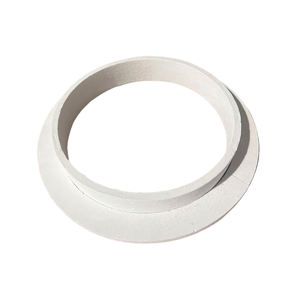
- Silicon carbide rings and burner nozzles maintain structural integrity in combustion environments.
- Silicon carbide brick and ceramic tiles line industrial furnaces for uniform heat distribution.
These components often outperform alternatives like alumina or mullite, especially in corrosive or high-wear settings. For example, silicon carbide zirconia tubes combine the toughness of zirconia with SiC’s conductivity for specialized sensors.
7. Choosing the Right Material for Your Application
Selecting between a silicon carbide crucible, a silicon nitride crucible factory product, or another ceramic depends on your specific needs:
- Need fast heating and cooling? Go with silicon carbide.
- Working in a nitrogen atmosphere with mechanical stress? Consider silicon nitride plates or custom silicon nitride heat shields.
- Require extreme hardness but low thermal cycling? Boron carbide might be worth the cost.
Always factor in purity, porosity, and post-processing. High-purity silicon carbide minimizes contamination in sensitive melts, while porous variants may be better for filtration or catalytic supports.
8. Conclusion
The silicon carbide crucible remains a cornerstone of high-temperature industrial processing—not because it’s the hardest or most exotic material, but because it offers the best balance of thermal, mechanical, and chemical properties for real-world use. Whether you’re melting aluminum, lining a furnace with silicon carbide brick, or serving pie in a silicon carbide ceramic pie dish, this versatile ceramic continues to prove its worth across industries and even dinner tables.
Our Website founded on October 17, 2012, is a high-tech enterprise committed to the research and development, production, processing, sales and technical services of ceramic relative materials such as 7. Our products includes but not limited to Boron Carbide Ceramic Products, Boron Nitride Ceramic Products, Silicon Carbide Ceramic Products, Silicon Nitride Ceramic Products, Zirconium Dioxide Ceramic Products, etc. If you are interested, please feel free to contact us.
RELATED POSTS
Boron Nitride Ceramic Coatings Improve Metal Oxidation Resistance
5 Common Problems and Practical Solutions for Using a Silicon Carbide Crucible
