Discover Premium Ceramic Products | Durability & Elegance United | Advanced Ceramics

1. Introduction
In the past 48 hours, a curious trend has swept social media: users are mistakenly identifying popular ceramic bakeware—like Staub or handmade pottery—as ‘silicon carbide crucibles.’ This mix-up stems from misleading product descriptions and AI-generated shopping recommendations. While both involve ceramics, a true silicon carbide crucible is an industrial-grade component designed for extreme heat and chemical resistance, not your Sunday casserole. Let’s clear up the confusion and dive into what silicon carbide crucibles really are—and why they matter.

2. What Is a Silicon Carbide Crucible?
A silicon carbide crucible is a high-performance container made primarily from silicon carbide (SiC), a compound known for its exceptional hardness, thermal conductivity, and resistance to thermal shock. These crucibles are engineered to melt and hold metals like aluminum, copper, and even precious alloys at temperatures exceeding 1,600°C (2,912°F). Unlike standard clay or porcelain crucibles, silicon carbide versions offer superior durability and longevity in foundries, laboratories, and metallurgical operations.
- Made from sintered or reaction-bonded silicon carbide (often labeled as RBSC or RBSiC)
- Resistant to oxidation, corrosion, and thermal cycling
- Used in metal casting, glass manufacturing, and semiconductor processing
3. Silicon Carbide vs. Other Advanced Ceramics
While silicon carbide dominates high-heat applications, it’s often compared to other technical ceramics. For instance, boron carbide vs silicon carbide debates usually center on hardness—boron carbide is harder but more brittle and expensive. Meanwhile, silicon nitride offers better fracture toughness and is preferred in dynamic load environments like bearings or turbine blades. A silicon nitride crucible factory might produce items for aerospace or biomedical uses, but these are rarer and costlier than SiC equivalents.
Silicon nitride ceramic components—such as silicon nitride rings, custom silicon nitride heat shields, silicon nitride plates, and even high purity silicon nitride powder for specialized markets—serve niche roles where impact resistance matters more than pure thermal stability.
4. Beyond Crucibles: The Wide World of Silicon Carbide Products
Silicon carbide isn’t just for crucibles. Its versatility spans industrial and even consumer domains:
- Industrial: silicon carbide brick, silicon carbide burner nozzles, silicon carbide ceramic columns, silicon carbide thermocouple protection tubes, and silicon carbide ceramic tubes for high-temperature furnaces (including silicon carbide tube furnace setups and silicon carbide mullite tube hybrids)
- Plumbing & Valves: silicon carbide ceramic disc taps, silicon carbide ceramic disk for tap, and silicon carbide ceramic quarter turn taps rely on SiC’s wear resistance
- Grinding & Machining: silicon carbide grinding disc, silicon carbide diamond grinding disc for pottery, and silicon carbide ceramic sanding discs leverage its abrasive nature
- Specialty Forms: silicon carbide discs, silicon carbide porous ceramic tube, and silicon carbide zirconia tubes serve filtration, sensing, and insulation roles
5. The Kitchen Confusion: Are Your Dinner Plates Really Silicon Carbide?
Here’s where things get tricky. Search results now flood with terms like ‘silicon carbide ceramic dinner plates,’ ‘silicon carbide baking dish Staub,’ or ‘silicon carbide ceramic butter dish with lid.’ In reality, most kitchenware—even if labeled ‘ceramic’—is made from stoneware, porcelain, or alumina, not silicon carbide. True silicon carbide ceramic baking dishes are extremely rare in households due to cost and brittleness.
That said, some high-end or experimental tableware may incorporate small amounts of SiC for thermal shock resistance, but they’re not pure silicon carbide. Terms like ‘silicon carbide white ceramic plates,’ ‘silicon carbide black plates ceramic,’ or ‘silicon carbide blue white porcelain plates’ are largely marketing misnomers or SEO keyword stuffing—not accurate material descriptions.
6. How Silicon Carbide Components Are Made
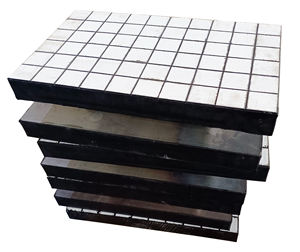
Manufacturing a genuine silicon carbide crucible or rbsic silicon carbide tile block involves advanced processes like reaction bonding (where silicon infiltrates a carbon-SiC preform) or pressureless sintering with additives. These methods yield dense, strong structures capable of withstanding harsh environments. Similarly, silicon carbide ceramic piping, silicon carbide ceramic tube insulators, and silicon carbide ceramic oven dishes (if truly made from SiC) require precise control of particle size, binder content, and firing atmosphere.
7. Conclusion
Silicon carbide crucibles are indispensable in heavy industry, offering unmatched performance under extreme conditions. While the term ‘silicon carbide’ is increasingly (and inaccurately) attached to everyday ceramics—from pasta bowls to Christmas platters—the real value of SiC lies in its engineering applications. Understanding the difference helps buyers avoid overpaying for misrepresented goods and ensures professionals select the right material for demanding tasks. Whether you’re melting metal or serving salad, knowing what your ceramic is really made of makes all the difference.
Our Website founded on October 17, 2012, is a high-tech enterprise committed to the research and development, production, processing, sales and technical services of ceramic relative materials such as 7. Our products includes but not limited to Boron Carbide Ceramic Products, Boron Nitride Ceramic Products, Silicon Carbide Ceramic Products, Silicon Nitride Ceramic Products, Zirconium Dioxide Ceramic Products, etc. If you are interested, please feel free to contact us.