Discover Premium Ceramic Products | Durability & Elegance United | Advanced Ceramics

In the relentlessly advancing realm of high-power electronics, thermal monitoring has become a critical challenge. As devices shrink and power densities rise, standard products like alumina or beryllia battle to satisfy the exacting needs of modern-day applications. Go into lightweight aluminum Nitride (AlN) Ceramic— a product whose remarkable thermal and electric properties set it as a transformative remedy for high-power digital product packaging. This write-up explores the compelling reasons why AIN ceramic linings are becoming the unmatched option for advanced sectors, from electric vehicles to 5G networks.
1. The Building Marvel of Aluminum Nitride Ceramic
1.1 What Is Lightweight Aluminum Nitride Ceramic?
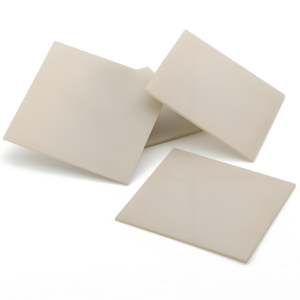
Lightweight Aluminum Nitride (AIN) is an advanced technological ceramic defined by a distinct crystalline framework and extraordinary product properties. Discovered in the 19th century, however, commercialized only in current decades, AIN comes from the family of nitride porcelains and displays a hexagonal wurtzite crystal lattice. This structure, made up of tightly adhered lightweight aluminum and nitrogen atoms, develops the structure for its exceptional thermal and mechanical performance. Unlike traditional oxides, AIN leverages strong covalent bonding to achieve an uncommon mix of high thermal conductivity and electrical insulation, making it indispensable for dissipating warm in portable, high-power digital systems.
1.2 The Chemical and Structural Tapestry
The chemical composition of AIN– 65.81% aluminum and 34.19% nitrogen– generates its durable and stable product habits. Each lightweight aluminum atom in the crystal framework is tetrahedrally coordinated with four nitrogen atoms, developing a thick, high-integrity network. This plan decreases phonon spreading, a crucial variable behind AIN’s outstanding thermal conductivity, which can reach theoretical values of up to 320 W/m · K. Moreover, the material’s pureness plays a pivotal role in its efficiency; high-purity AIN powders (≥ 99%) with marginal oxygen content ensure ideal thermal and dielectric properties, while trace ingredients like yttria work as sintering aids to improve densification and practical reliability.
2. Unmatched Thermal Administration Capacities
2.1 Impressive Thermal Conductivity and Warm Dissipation
AIN’s thermal conductivity– 5– 8 times greater than that of alumina– sets it as a game-changer for thermal management. In high-power digital product packaging, heat produced by components like insulated-gate bipolar transistors (IGBTs) or microprocessors must be quickly dissipated to avoid failing. AIN liners effectively carry heat far from sensitive areas, keeping operational temperatures within secure restrictions. This ability is more enhanced by AIN’s reduced thermal development coefficient, which carefully matches that of silicon. This profound compatibility lowers thermal tension at important interfaces, such as semiconductor dies or substrates, mitigating delamination and breaking also under extreme thermal cycling.
2.2 Superior Stability in High-Temperature Environments
AIN keeps its mechanical and dielectric stamina even at raised temperatures, withstanding functional varieties up to 1,300 ° C without considerable deterioration. Unlike polymers or metals, which might soften or oxidize, AIN displays extraordinary resistance to thermal shock and exhaustion. For instance, in electric car inverters or aerospace power modules, where temperature levels rise and fall drastically, AIN linings guarantee steady integrity. This stability is complemented by AIN’s high decay temperature, making it appropriate for applications involving extreme thermal loads, such as laser diodes and high-frequency RF amplifiers.
3. Outstanding Electric and Mechanical Characteristics
3.1 Electrifying Insulation and Dielectric Performance
AIN is an outstanding electrical insulator, with a volume resistivity of ~ 10 ¹⁴ Ω · cm and a dielectric toughness of 15 kV/mm. These properties make it perfect for isolating high-voltage elements while minimizing leak currents. Furthermore, its low dielectric, continuous and minimal dielectric loss allow exceptional signal integrity in high-frequency applications, such as 5G base stations and radar systems. By minimizing parasitical capacitance and electromagnetic disturbance, AIN liners assist in keeping signal quality and power effectiveness in densely packed circuits.
3.2 Formidable Mechanical Stamina and Resilience
With a Vickers hardness of 12 Grade point average, and a flexural strength of 300 MPa, AIN ceramic liners offer remarkable resistance to abrasion, rust, and mechanical tension. Their high Youthful’s modulus ensures dimensional stability under loads, while their non-reactive nature avoids degradation when exposed to thaw steels or rough chemicals. In automotive or industrial settings, where vibration and physical effects are common, AIN components give long-lasting performance compared to polymer-based options.
4. Versatile Applications Across High-Power Industries
4.1 Changing Power Electronic Devices and Semiconductor Packaging
AIN liners are commonly use as substratums, warm spreaders, and protective housings in shielded steel substratums (IMS), multichip components (MCMs), and direct-bonded copper (DBC) systems. As an example, in AI-driven data centers, AIN-based packages dissipate warm from high-performance computer chips, ensuring undisturbed operation. Similarly, in renewable resource systems, AIN substrates improve the reliability of solar inverters and wind turbine converters by handling heat from silicon carbide (SiC) or gallium nitride (GaN) power devices.
4.2 Introducing Functions in Electric Automobiles and Aerospace
The auto industry leverages AIN liners in electric vehicle (EV) battery monitoring systems, traction inverters, and onboard chargers. By keeping ideal temperature levels in these elements, AIN helps extend EV array and battery life expectancy. In aerospace, AIN’s lightweight yet durable nature makes it suitable for avionics cooling down options, where failing is not an option. Its ability to work accurately in severe atmospheres– from subzero conditions to high-altitude radiation– emphasizes its unparalleled versatility.

4.3 Making It Possible For Next-Generation LED and RF Devices
AIN’s optical transparency in the infrared spectrum and compatibility with GaN semiconductors make it a favored selection for high-brightness LED product packaging. Furthermore, in RF power amplifiers and microwave circuits, AIN linings lessen signal loss while dissipating heat from gallium arsenide (GaAs) transistors. This twin performance supports the development of small, energy-efficient interaction tools for IoT and a clever framework.
5. Attending To Limitations and Future Prospects
5.1 Browsing Expense and Processing Difficulties
While AIN uses outstanding efficiency, its prevalent fostering has been tempered by greater expenses compared to alumina. Basic material pureness and energy-intensive sintering procedures (e.g., at 1,600– 1,800 ° C) add to this premium. However, advances in powder synthesis (e.g., carbothermal reduction) and near-net-shape forming techniques (e.g., shot molding or 3D printing) are gradually decreasing manufacturing expenditures. Moreover, AIN’s sensitivity to moisture– requiring dry storage to prevent hydrolysis– can be alleviated through protective finishings and careful handling.
5.2 The Trajectory of Innovation and Adoption
Ongoing study aims to enhance AIN’s residential properties with nanostructuring, composite styles, and low-temperature sintering aids. As the international need for high-power electronics surges– especially in EVs, 5G, and AI– the market for AIN ceramic linings is predicted to grow significantly. With its unassailable combination of thermal, electrical, and mechanical expertise, AIN is poised to become the linchpin of next-generation electronic product packaging, equipping sectors to press the limits of power density and effectiveness.
6. Verdict
Aluminum Nitride Ceramic linings represent a radical change in product scientific research, resolving the essential thermal management challenges of high-power electronics. Their unmatched thermal conductivity, electrical insulation, and mechanical strength make them a crucial property for engineers and developers aiming to develop smaller, quicker, and more reputable systems. As technology proceeds its inexorable march ahead, AIN stands prepared to underpin the technologies that will certainly define tomorrow’s electronic landscape.
Supplier
Advanced Ceramics founded on October 17, 2012, is a high-tech enterprise committed to the research and development, production, processing, sales and technical services of ceramic relative materials such as Aluminum Nitride Ceramic Liner. Our products includes but not limited to Boron Carbide Ceramic Products, Boron Nitride Ceramic Products, Silicon Carbide Ceramic Products, Silicon Nitride Ceramic Products, Zirconium Dioxide Ceramic Products, etc. If you are interested, please feel free to contact us.
Tags:aluminum nitride,aln ceramic,aluminum nitride thermal conductivity