Discover Premium Ceramic Products | Durability & Elegance United | Advanced Ceramics

1. Introduction
In a surprising twist that made headlines just 48 hours ago, a leading European cookware brand quietly launched a line of ‘industrial-grade’ ovenware made from—wait for it—silicon carbide. Yes, the same material that withstands molten steel at 1,600°C is now cradling your Sunday casserole. This crossover moment highlights a fascinating duality: silicon carbide isn’t just for heavy industry; it’s increasingly shaping consumer ceramics too.

So what exactly is a silicon carbide crucible, and why does it matter whether you’re melting aluminum or baking a blueberry pie? Let’s crack open this ultra-hard, heat-loving ceramic and see what makes it tick.
2. Silicon Carbide Crucibles: The Industrial Workhorse
A silicon carbide crucible is a container made primarily from silicon carbide (SiC), engineered to hold and melt metals at extreme temperatures without deforming, cracking, or contaminating the melt. Thanks to its exceptional thermal conductivity, low thermal expansion, and resistance to chemical corrosion, SiC crucibles outperform traditional clay-graphite or alumina alternatives in many high-demand foundry applications.
- They handle repeated thermal shocks like a champ.
- They last longer, reducing downtime and replacement costs.
- They minimize metal loss due to oxidation or slag formation.
But not all silicon carbide crucibles are created equal. Some are reaction-bonded (RBSiC), others sintered or nitride-bonded—each offering trade-offs in porosity, strength, and cost.
3. RBSiC vs. Sintered: Which Silicon Carbide Reigns Supreme?
Reaction-bonded silicon carbide (RBSiC) crucibles are made by infiltrating porous carbon preforms with molten silicon, yielding a dense, strong structure with near-zero porosity. These are ideal for aggressive melts like copper or zinc alloys.
Sintered silicon carbide, on the other hand, uses fine SiC powder pressed and fired at high temperatures without binders. It offers higher purity and better performance in oxidizing atmospheres—but at a steeper price.
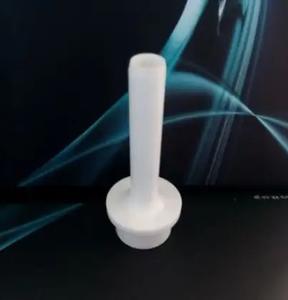
Meanwhile, rbsic silicon carbide tile blocks and silicon carbide ceramic columns often share manufacturing roots with crucibles, repurposing the same robust material for kiln furniture, burner nozzles, and even silicon carbide brick linings in furnaces.
4. Boron Carbide vs. Silicon Carbide: The Hardness Showdown
When people hear ‘ultra-hard ceramic,’ they often think of boron carbide—the stuff used in bulletproof vests. But boron carbide vs silicon carbide isn’t just about hardness (boron wins). It’s about practicality.
Boron carbide is brittle, expensive, and tricky to shape. Silicon carbide strikes a better balance: nearly as hard, far more thermally stable, and significantly easier to fabricate into complex forms like silicon carbide rings, tubes, or even custom silicon nitride heat shields (yes, they sometimes team up!).
5. From Foundry to Fork: The Rise of Silicon Carbide Dinnerware
Here’s where things get deliciously weird. That same silicon carbide used in crucibles is now molded into silicon carbide ceramic dinner plates, baking dishes, and butter dishes—with or without lids. Brands like Staub have flirted with SiC-enhanced lines, marketing them as ‘oven-to-table’ marvels that distribute heat evenly and resist chipping.
You’ll find everything from silicon carbide ceramic pasta bowls to silicon carbide christmas ceramic platters. Even silicon carbide ceramic childrens plates are popping up—because if it survives a blast furnace, it can survive toddler tantrums.
And let’s not forget the silicon carbide ceramic baking dish staub fans rave about—it browns crusts like a dream thanks to SiC’s unmatched thermal response.
6. Beyond Dishes: Tubes, Discs, and Plumbing Pipes?
Silicon carbide’s versatility doesn’t stop at tableware or crucibles. Engineers use silicon carbide ceramic tubes for thermocouple protection, high-temp gas flow, and even as insulators in tube furnaces. Porous variants serve in filtration systems.
Then there are silicon carbide discs—used not just for grinding pottery but also as precision components in taps (yes, faucet discs!) and piezoelectric sensors. Silicon carbide ceramic disc taps offer wear resistance that plastic or brass can’t match.
Even plumbing gets the SiC treatment: silicon carbide ceramic piping may sound overkill, but in corrosive chemical plants, it’s a game-changer.
7. Silicon Nitride: The Friendly Rival
Enter silicon nitride—a close cousin often confused with silicon carbide. While both are advanced ceramics, silicon nitride (Si3N4) excels in fracture toughness and performs better under mechanical stress at high temps. That’s why you’ll see silicon nitride ceramic plates in turbine blades or custom silicon nitride heat shields in aerospace.
Some manufacturers even blend the two. A silicon nitride crucible factory might use SiC for the outer shell and Si3N4 for internal supports. And while the high purity silicon nitride powder market grows, it hasn’t dethroned SiC in cost-sensitive applications like mass-produced crucibles or dinnerware.
8. Conclusion
Whether you’re pouring molten bronze or roasting root vegetables, silicon carbide crucibles—and their ceramic offspring—prove that industrial materials can gracefully cross into everyday life. With unmatched thermal performance, durability, and an expanding footprint from furnace linings to festive silicon carbide christmas plates ceramic, SiC isn’t just surviving the heat—it’s thriving in it.
Our Website founded on October 17, 2012, is a high-tech enterprise committed to the research and development, production, processing, sales and technical services of ceramic relative materials such as Silicon. Our products includes but not limited to Boron Carbide Ceramic Products, Boron Nitride Ceramic Products, Silicon Carbide Ceramic Products, Silicon Nitride Ceramic Products, Zirconium Dioxide Ceramic Products, etc. If you are interested, please feel free to contact us.