Discover Premium Ceramic Products | Durability & Elegance United | Advanced Ceramics

1. Introduction
In a major development just 24 hours ago, Wolfspeed announced a breakthrough in 200mm silicon carbide (SiC) wafer yield rates at its Mohawk Valley fab, signaling accelerated adoption of SiC power devices in electric vehicles and renewable energy systems. Behind this progress lies an unsung hero: the silicon carbide crucible. Unlike conventional graphite or alumina containers, silicon carbide crucibles offer unmatched performance in the extreme environments required to grow high-purity SiC crystals—a process that pushes materials to their absolute limits.
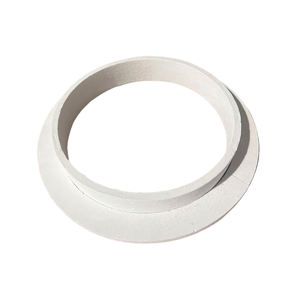
While many associate silicon carbide with abrasives, armor, or even dinnerware (yes, there’s a growing market for silicon carbide ceramic dinner plates and baking dishes), its most demanding—and lucrative—application is in semiconductor crystal growth. This niche field requires not just heat resistance, but near-perfect chemical compatibility and dimensional stability at temperatures exceeding 2,200°C.
2. Why Silicon Carbide Crucibles Are Essential for SiC Crystal Growth
2.1. The Challenge of Growing Silicon Carbide Single Crystals

Producing bulk single-crystal silicon carbide is notoriously difficult. The most common method, physical vapor transport (PVT), involves sublimating high-purity SiC powder in a sealed crucible under inert gas at ultra-high temperatures. During this process, any contamination from the crucible wall can introduce defects that ruin the entire ingot. Traditional graphite crucibles react with SiC vapor, releasing carbon impurities. Alumina melts or deforms. Only a crucible made of the same material—silicon carbide—can withstand the conditions without compromising purity.
2.2. Superior Material Properties in Action
Silicon carbide crucibles excel due to their exceptional combination of properties: thermal conductivity up to 120 W/m·K, low thermal expansion, and outstanding resistance to thermal shock. They maintain structural integrity through repeated heating and cooling cycles in PVT furnaces. Moreover, their chemical inertness prevents unwanted reactions with silicon, carbon, or dopants like nitrogen or aluminum used during crystal growth.

3. Beyond the Crucible: Supporting Components in High-Temperature SiC Processing
3.1. Integrated Furnace Architecture Using SiC Ceramics
Modern SiC crystal growth systems rely on a full suite of silicon carbide-based components. These include silicon carbide ceramic tubes for furnace chambers, silicon carbide thermocouple protection tubes for accurate temperature monitoring, and silicon carbide brick or rbsic silicon carbide tile blocks for insulation and structural support. Even silicon carbide ring seals and silicon carbide burner nozzles contribute to maintaining a clean, stable thermal environment.
3.2. Comparison with Alternatives: Boron Carbide vs Silicon Carbide
Some may wonder about boron carbide vs silicon carbide for high-temp applications. While boron carbide is harder and lighter, it oxidizes more readily above 800°C and lacks the thermal conductivity needed for uniform crystal growth. Silicon carbide remains the gold standard for crucibles and furnace linings in this context.
4. The Role of Silicon Nitride in Complementary Applications
Although silicon nitride isn’t typically used for crucibles in SiC crystal growth, it plays a vital supporting role in related high-temperature processes. Custom silicon nitride heat shields, silicon nitride rings, and silicon nitride plates are often employed in sintering or annealing steps where oxidation resistance and creep strength are paramount. A growing high purity silicon nitride powder market fuels innovation in these components, with specialized silicon nitride crucible factories emerging to serve aerospace and electronics sectors.
5. Misconceptions and Market Noise
It’s worth noting that while consumer products like silicon carbide ceramic baking dishes, silicon carbide ceramic salad bowls, or even silicon carbide black ceramic plates have gained popularity for their durability and aesthetic appeal, they are made from different grades of SiC—often reaction-bonded with binders—and are not suitable for semiconductor processing. Similarly, items like silicon carbide ceramic disc taps or silicon carbide ceramic piping serve entirely different industrial niches. Confusing these applications dilutes understanding of the precision engineering behind true high-purity silicon carbide crucibles.
6. Conclusion
As the global push for efficient power electronics intensifies, the demand for high-quality silicon carbide wafers will continue to rise. At the heart of this supply chain is the silicon carbide crucible—an engineered marvel that enables the production of next-generation semiconductors. Far from being a commodity item, it represents the convergence of materials science, thermal engineering, and ultra-clean manufacturing. In this high-stakes niche, even minor improvements in crucible design can translate into millions in wafer yield gains—proving that sometimes, the container matters as much as the crystal it holds.
Our Website founded on October 17, 2012, is a high-tech enterprise committed to the research and development, production, processing, sales and technical services of ceramic relative materials such as Silicon. Our products includes but not limited to Boron Carbide Ceramic Products, Boron Nitride Ceramic Products, Silicon Carbide Ceramic Products, Silicon Nitride Ceramic Products, Zirconium Dioxide Ceramic Products, etc. If you are interested, please feel free to contact us.