Discover Premium Ceramic Products | Durability & Elegance United | Advanced Ceramics

1. Introduction
Just 24 hours ago, leading semiconductor equipment maker Applied Materials announced a breakthrough in silicon carbide (SiC) wafer production efficiency—citing the use of advanced silicon carbide crucibles as a key enabler. This development underscores a quiet revolution happening inside high-temperature furnaces worldwide: the shift toward SiC-based containment systems for growing ultra-pure semiconductor crystals.
While most consumers associate ‘silicon carbide’ with ceramic dinnerware or sanding discs, its real industrial muscle lies in extreme-environment applications. Among these, the silicon carbide crucible stands out as an unsung hero in next-generation electronics manufacturing.
2. Why Silicon Carbide Crucibles? The Semiconductor Connection
Growing single-crystal silicon carbide—a material essential for EV inverters, 5G infrastructure, and fast-charging systems—requires temperatures above 2,000°C in chemically aggressive atmospheres. Traditional quartz crucibles degrade rapidly under these conditions, contaminating the melt and reducing yield.
Enter the silicon carbide crucible. Made from high-purity sintered SiC, it offers exceptional thermal conductivity, near-zero thermal expansion mismatch with the SiC melt, and outstanding chemical inertness. These properties minimize defects and enable longer furnace runs—critical for cost-effective wafer production.
- Resists decomposition up to 2,700°C in inert atmospheres
- Prevents metallic contamination that ruins semiconductor performance
- Maintains structural integrity during repeated thermal cycling
3. Beyond the Crucible: A Family of High-Performance SiC Components

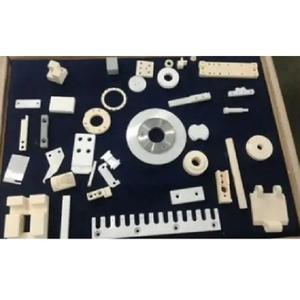
The same material science that enables robust silicon carbide crucibles also powers a suite of related industrial ceramics. In crystal growth furnaces, you’ll often find silicon carbide ceramic tubes serving as thermocouple protection sheaths or furnace liners. Silicon carbide rings and columns provide precise mechanical support without warping.
Even burner nozzles in high-temperature processing equipment now use silicon carbide for longevity. And while rbsic silicon carbide tile blocks line industrial kilns, it’s the crucible that remains central to semiconductor purity.
Interestingly, engineers sometimes compare boron carbide vs silicon carbide for containment roles—but boron’s tendency to diffuse into melts makes it unsuitable for electronic-grade materials. Silicon carbide wins by default in purity-critical applications.
4. Silicon Nitride: The Complementary Contender
While silicon carbide dominates high-heat containment, silicon nitride plays a supporting role. Custom silicon nitride heat shields, silicon nitride rings, and silicon nitride plates are increasingly used in adjacent zones of crystal growth systems where impact resistance and thermal shock tolerance matter more than direct melt contact.

Factories specializing in silicon nitride crucible production are emerging, though they cater to different niches—like molten metal handling rather than semiconductor crystal growth. The high purity silicon nitride powder market is expanding, but it hasn’t displaced SiC in the crucible core.
5. Not Your Kitchenware: Debunking the Dinnerware Confusion
A quick online search reveals hundreds of listings for ‘silicon carbide ceramic baking dish’, ‘silicon carbide dinner ceramic plates’, and even ‘silicon carbide ceramic butter dish’. While visually striking, these consumer products typically contain only trace amounts of SiC—if any—and rely on marketing buzzwords rather than true silicon carbide performance.
Real industrial silicon carbide is black, extremely hard, and not food-safe in raw form. The glossy white or blue-white porcelain plates labeled as such are almost certainly conventional ceramics with misleading branding. True silicon carbide crucibles bear no resemblance to kitchenware—they’re dense, unglazed, and engineered for survival in hellish conditions.
6. Future Outlook: Scaling SiC Wafer Production
With global demand for silicon carbide power devices projected to triple by 2030, manufacturers are racing to scale production. Central to this effort is the reliability of the silicon carbide crucible. Innovations in near-net-shape forming and reduced oxygen content in SiC powders are yielding crucibles with fewer microcracks and longer lifespans.
Companies investing in vertical integration—from high purity silicon carbide powder to finished crucibles—are gaining a competitive edge. Meanwhile, research continues into hybrid designs, such as silicon carbide-zirconia tubes for specialized thermal profiles.
7. Conclusion
The silicon carbide crucible may never grace a dining table, but it’s indispensable on the factory floor of tomorrow’s tech economy. As electric vehicles and renewable energy systems demand more efficient power electronics, this unassuming ceramic vessel will remain at the heart of the supply chain—quietly enabling the chips that power our future.
Our Website founded on October 17, 2012, is a high-tech enterprise committed to the research and development, production, processing, sales and technical services of ceramic relative materials such as Silicon. Our products includes but not limited to Boron Carbide Ceramic Products, Boron Nitride Ceramic Products, Silicon Carbide Ceramic Products, Silicon Nitride Ceramic Products, Zirconium Dioxide Ceramic Products, etc. If you are interested, please feel free to contact us.
RELATED POSTS
7 Essential Facts About Silicon Carbide Crucibles and Their Industrial & Culinary Uses
Silicon Carbide Crucibles: The High-Performance Workhorse of Industrial and Artisan Ceramics
5 Niche Applications Where Silicon Carbide Crucibles Are Making a Real Difference
Silicon Carbide Crucible: The Ultimate High-Temperature Ceramic Solution
Japanese Companies Develop High Thermal Conductivity Aluminum Nitride Packaging Materials To Break Through The Bottleneck Of Thermal Management
