Discover Premium Ceramic Products | Durability & Elegance United | Advanced Ceramics

1. Introduction
Just 24 hours ago, Wolfspeed—the U.S.-based leader in silicon carbide (SiC) semiconductor technology—announced a major expansion of its Mohawk Valley fab to meet surging global demand for SiC power devices in electric vehicles and renewable energy systems. At the heart of this manufacturing leap lies a seemingly humble but mission-critical component: the silicon carbide crucible.

While most consumers associate silicon carbide with ceramic dinnerware or sanding discs, its real industrial might shines in ultra-high-temperature applications. In semiconductor fabs, silicon carbide crucibles are indispensable for growing large, defect-free single crystals of SiC—a process that demands extreme thermal stability, chemical inertness, and mechanical strength.
2. Why Silicon Carbide Crucibles Dominate Crystal Growth
Growing silicon carbide crystals requires temperatures above 2,000°C in an argon atmosphere. Few materials can survive these conditions without contaminating the melt or deforming under stress. Enter the silicon carbide crucible.
Unlike graphite crucibles—which can introduce carbon impurities—silicon carbide crucibles offer near-perfect compatibility with the molten SiC charge. Their low thermal expansion, high thermal conductivity, and resistance to thermal shock make them ideal for the physical vapor transport (PVT) method, the industry standard for SiC crystal growth.
- They minimize contamination during sublimation
- Maintain structural integrity above 2,200°C
- Enable longer furnace runs and higher yield
3. Boron Carbide vs Silicon Carbide: A Crucible Showdown
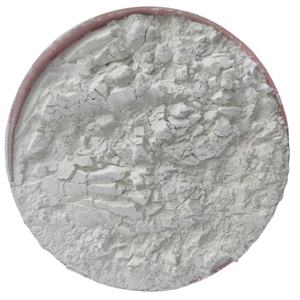
Some manufacturers have experimented with boron carbide crucibles due to their even higher melting point (~2,760°C). However, boron carbide is significantly more expensive, harder to machine, and prone to reacting with silicon at high temperatures—leading to unwanted boron doping in the crystal.
In contrast, silicon carbide crucibles provide a chemically stable environment that preserves the stoichiometry of the SiC vapor phase. This makes them not just practical but economically superior for mass production.
4. Beyond the Crucible: Supporting Components in SiC Furnaces
The success of a silicon carbide crucible doesn’t happen in isolation. It works alongside a suite of specialized silicon carbide components engineered for extreme environments:
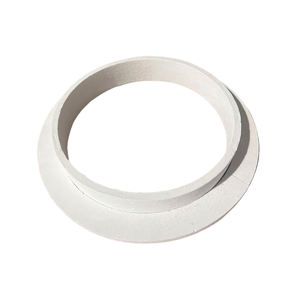
- silicon carbide ring: used as spacers and supports inside the growth chamber
- silicon carbide ceramic columns: provide vertical structural reinforcement
- silicon carbide tube furnace liners: protect heating elements and insulate the hot zone
- silicon carbide thermocouple protection tubes: ensure accurate temperature monitoring without degradation
These parts—often made from reaction-bonded silicon carbide (RBSiC)—deliver the dimensional stability and purity required for consistent wafer quality.
5. Where Silicon Nitride Falls Short
You might wonder: what about silicon nitride? After all, there’s a growing market for high purity silicon nitride powder, and products like silicon nitride crucible factory offerings, silicon nitride rings, and custom silicon nitride heat shields are gaining traction in aerospace and metallurgy.
However, silicon nitride begins to decompose around 1,900°C in inert atmospheres—below the threshold needed for SiC sublimation. While excellent for lower-temperature applications (e.g., bearing components or molten metal handling), it simply can’t replace silicon carbide in semiconductor crystal growth furnaces.
6. The Bigger Picture: From Crucibles to Consumer Tech
Every silicon carbide crucible used in a PVT furnace ultimately enables faster-charging EVs, more efficient solar inverters, and compact 5G base stations. As demand soars, manufacturers are also exploring advanced forms like porous silicon carbide ceramic tubes for gas distribution and rbsic silicon carbide tile blocks for furnace insulation.
Interestingly, the same material science that powers these industrial crucibles also appears in everyday items—like silicon carbide ceramic baking dishes or silicon carbide ceramic dinner plates—but those consumer-grade versions lack the ultra-high purity and density required for semiconductor use.
7. Conclusion
The silicon carbide crucible may be hidden inside a sealed furnace, but it’s a linchpin of the clean energy and digital infrastructure revolution. As companies like Wolfspeed scale production, the demand for high-performance silicon carbide ceramics—from crucibles to tubes to rings—will only intensify, cementing SiC’s role far beyond kitchenware or abrasives.
Our Website founded on October 17, 2012, is a high-tech enterprise committed to the research and development, production, processing, sales and technical services of ceramic relative materials such as Silicon. Our products includes but not limited to Boron Carbide Ceramic Products, Boron Nitride Ceramic Products, Silicon Carbide Ceramic Products, Silicon Nitride Ceramic Products, Zirconium Dioxide Ceramic Products, etc. If you are interested, please feel free to contact us.
RELATED POSTS
How to Install Ceramic Floor Tile on Wood Subfloors: Tips and Tricks
Application Breakthrough Of Aluminum Nitride Copper-Clad Laminates (Aln-Dbc) In The Field Of New Energy
Silicon Carbide Crucibles vs. Silicon Nitride: A Deep Dive into High-Temperature Ceramic Solutions
What Makes Silicon Carbide Crucibles Essential in High-Temperature Industrial Applications?
