Discover Premium Ceramic Products | Durability & Elegance United | Advanced Ceramics

1. Introduction
In the past 48 hours, a curious trend has emerged on social media: luxury home goods retailers are marketing ‘silicon carbide ceramic dinner plates’ as ultra-durable, oven-to-table cookware. While some influencers praise their heat retention and sleek black finish, others question whether these items actually contain true silicon carbide or are simply styled to mimic its appearance. This buzz underscores a broader truth—silicon carbide isn’t just for foundries anymore. From high-temperature crucibles to artisanal bakeware, this advanced ceramic is quietly reshaping both industrial and domestic landscapes.

2. What Is a Silicon Carbide Crucible?
A silicon carbide crucible is a specialized container made from silicon carbide (SiC), a compound known for its exceptional hardness, thermal conductivity, and resistance to thermal shock and chemical corrosion. Unlike traditional clay or graphite crucibles, silicon carbide crucibles can withstand temperatures exceeding 1,600°C (2,912°F), making them ideal for melting non-ferrous metals like aluminum, copper, and zinc.
These crucibles are typically manufactured through processes like reaction bonding (RBSiC) or sintering, which yield dense, robust structures capable of repeated thermal cycling without cracking. Their durability translates into longer service life and reduced contamination of molten metal—critical factors in precision casting and metallurgy.
3. Beyond the Foundry: Unexpected Uses of Silicon Carbide
While silicon carbide crucibles dominate industrial metal processing, the material’s appeal has spilled into unexpected domains. Manufacturers now produce silicon carbide ceramic baking dishes, casserole dishes with lids, butter dishes, salad bowls, and even children’s plates—all marketed for their thermal stability and modern aesthetic. Brands like Staub have inspired lookalike lines labeled ‘silicon carbide baking dish Staub,’ though most consumer versions use SiC-infused glazes or composites rather than pure structural SiC.
- Silicon carbide ceramic dinner plates (including black, white, and blue-white porcelain styles)
- Silicon carbide ceramic serving platters and Christmas-themed tableware
- Silicon carbide ramekins and pie dishes designed for oven-to-table use

It’s worth noting that true structural silicon carbide is rarely used in full dinnerware sets due to cost and machining difficulty. Instead, many products feature silicon carbide coatings or blends that mimic performance benefits while remaining affordable.
4. Silicon Carbide vs. Other Advanced Ceramics
When comparing high-performance ceramics, two names often arise: silicon carbide and silicon nitride. Both offer excellent thermal and mechanical properties, but they serve different niches. Silicon carbide excels in thermal conductivity and abrasion resistance, making it perfect for crucibles, burner nozzles, and grinding discs. In contrast, silicon nitride is tougher and more impact-resistant, commonly used in bearings, cutting tools, and custom heat shields.
The phrase ‘boron carbide vs silicon carbide’ also surfaces in armor and abrasive applications. Boron carbide is harder but more brittle and expensive, while silicon carbide strikes a balance between hardness, cost, and manufacturability.
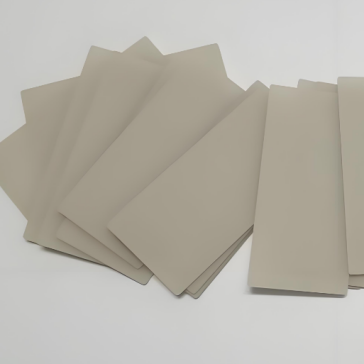
Meanwhile, facilities like a ‘silicon nitride crucible factory’ cater to niche aerospace or semiconductor needs, whereas silicon carbide components—such as RBSiC silicon carbide tile blocks, ceramic columns, rings, bricks, and tubes—are widely deployed in furnaces, kilns, and chemical processing systems.
5. Industrial Components Made from Silicon Carbide
Beyond crucibles, silicon carbide forms the backbone of numerous industrial parts. Silicon carbide ceramic pipes and tubes handle corrosive fluids at high temperatures, while porous variants serve in filtration systems. Thermocouple protection tubes made from SiC shield sensors in aggressive furnace environments.
Other key components include:
- Silicon carbide burner nozzles for efficient combustion
- Silicon carbide grinding and sanding discs for precision machining
- Silicon carbide disc taps and ceramic disk valves for plumbing
- Silicon carbide ceramic tube insulators and mullite-reinforced tubes for electrical and thermal isolation
These parts leverage SiC’s near-inertness, ensuring longevity even under extreme conditions where metals or standard ceramics would fail.
6. The Kitchen Meets the Kiln
Perhaps the most surprising evolution is silicon carbide’s crossover into culinary culture. Products like ‘silicon carbide ceramic oven dish,’ ‘baking tray,’ and ‘casserole ceramic dish’ promise even heating and dramatic presentation. Some artisans even create ‘silicon carbide ceramic plates for painting,’ using the material’s smooth, non-porous surface as a canvas.
However, consumers should verify claims carefully. True silicon carbide dinnerware is rare; most items are stoneware or porcelain with SiC-inspired finishes. That said, even composite versions benefit from enhanced thermal shock resistance—ideal for broiling, baking, and serving.
7. Conclusion
The silicon carbide crucible remains an industrial staple, but its influence now extends far beyond the foundry floor. From high-purity silicon nitride powder markets to handcrafted ceramic plates, advanced ceramics are blurring the lines between utility and artistry. As manufacturing techniques improve and costs decrease, expect to see even more innovative uses of silicon carbide—in factories, kitchens, and beyond.
Our Website founded on October 17, 2012, is a high-tech enterprise committed to the research and development, production, processing, sales and technical services of ceramic relative materials such as Silicon. Our products includes but not limited to Boron Carbide Ceramic Products, Boron Nitride Ceramic Products, Silicon Carbide Ceramic Products, Silicon Nitride Ceramic Products, Zirconium Dioxide Ceramic Products, etc. If you are interested, please feel free to contact us.