Discover Premium Ceramic Products | Durability & Elegance United | Advanced Ceramics

1. Introduction
When you think of silicon carbide, dinnerware or baking dishes might come to mind—but that’s just the tip of the iceberg. In reality, one of the most demanding and fascinating uses of this ultra-hard ceramic lies far from the kitchen: inside high-temperature crystal growth furnaces. Specifically, the silicon carbide crucible serves as the unsung hero in producing single-crystal sapphire, yttrium aluminum garnet (YAG), and other advanced optical and electronic materials.
These aren’t just lab curiosities—they’re essential components in everything from smartphone camera lenses and LED lighting to missile guidance systems and semiconductor wafer carriers. And none of it would be possible without the thermal stability, chemical inertness, and mechanical strength of the silicon carbide crucible.
2. Why Silicon Carbide Crucibles? The Science Behind the Choice
2.1. Thermal Shock Resistance and High-Temperature Stability
Crystal growth processes like the Kyropoulos or Czochralski methods require sustained temperatures above 2,000°C. At these extremes, most ceramics crack, warp, or react with the molten oxide. Silicon carbide, however, maintains structural integrity up to 2,700°C in inert atmospheres. Its low thermal expansion coefficient and high thermal conductivity allow rapid heating and cooling without catastrophic failure—making it ideal for repeated industrial cycles.
2.2. Chemical Inertness in Reactive Melts
Molten aluminum oxide (Al₂O₃) is highly corrosive. A crucible must not only withstand heat but also resist dissolution or contamination. Silicon carbide forms a protective silica layer when exposed to oxygen, which passivates the surface and minimizes interaction with the melt. This ensures high-purity crystal output—critical for optical clarity and electronic performance.
3. Niche Application Spotlight: Sapphire Crystal Growth for Optoelectronics
Sapphire (single-crystal Al₂O₃) is a cornerstone material in modern optoelectronics. It’s used as a substrate for gallium nitride (GaN)-based LEDs, in scratch-resistant watch crystals, and even as transparent armor. Growing flawless, meter-scale sapphire boules demands a crucible that won’t introduce impurities or fail mid-process.
Here, the silicon carbide crucible shines. Unlike graphite crucibles—which can introduce carbon contamination—silicon carbide offers a cleaner interface. And compared to alternatives like boron carbide vs silicon carbide, the latter wins on cost, machinability, and oxidation resistance. Boron carbide, while harder, oxidizes more readily above 800°C, limiting its use in air-containing or oxygen-rich crystal growth environments.
4. How It Compares to Other Advanced Ceramics
4.1. Silicon Carbide vs. Silicon Nitride
Silicon nitride ceramic is renowned for its toughness and thermal shock resistance, and you’ll find silicon nitride crucible factory output in some specialized applications. However, silicon nitride begins to decompose around 1,900°C—well below the melting point of sapphire (2,050°C). Thus, it’s unsuitable for direct melt containment in high-oxide systems.
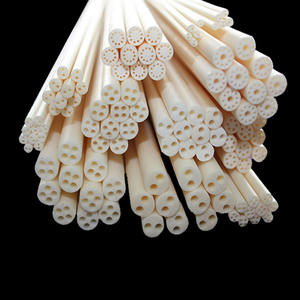
That said, silicon nitride still plays a supporting role: custom silicon nitride heat shield components, silicon nitride ring insulators, and silicon nitride plate fixtures are often used alongside silicon carbide crucibles to manage thermal gradients and support furnace architecture.
4.2. Beyond Crucibles: Complementary Silicon Carbide Components
The same furnace that houses a silicon carbide crucible often integrates other silicon carbide parts for reliability:
- silicon carbide ceramic tubes for thermocouple protection
- silicon carbide burner nozzles for precise flame control
- silicon carbide brick or rbsic silicon carbide tile block linings for insulation
- silicon carbide ceramic columns for structural support
Even silicon carbide discs and silicon carbide ceramic grinding disc tools are used post-growth to slice and polish the resulting crystals—showcasing the material’s versatility across the entire production chain.
5. Manufacturing Considerations and Purity Requirements
Not all silicon carbide crucibles are created equal. For crystal growth, manufacturers demand high-purity, reaction-bonded (RBSiC) or sintered variants with minimal free silicon or metallic impurities. Contamination as low as parts per million can ruin an entire crystal batch.
This has spurred innovation in the high purity silicon nitride powder market and parallel advances in silicon carbide processing—ensuring tighter control over grain size, porosity, and phase composition. Crucibles are often custom-machined to fit specific furnace geometries, with features like tapered walls or integrated lifting lugs.
6. The Bigger Picture: Enabling Next-Gen Technologies
Without reliable silicon carbide crucibles, scaling up production of sapphire substrates for micro-LED displays or UV-C LEDs would be economically unfeasible. The same applies to emerging applications like laser gain media (e.g., Nd:YAG crystals) and radiation-hardened sensors for space missions.
Interestingly, while consumer products like silicon carbide ceramic baking dish or silicon carbide ceramic dinner plates leverage the material’s durability and aesthetics, they represent a tiny fraction of its industrial impact. The real value lies in these hidden, high-stakes applications where failure is not an option.
7. Conclusion
From the heart of a 2,000°C furnace to the lens of your smartphone camera, the silicon carbide crucible enables technologies we rely on daily—often without realizing it. Its unmatched blend of thermal, chemical, and mechanical properties makes it irreplaceable in advanced crystal growth, outperforming both traditional refractories and competing ceramics like boron carbide or silicon nitride. As demand grows for purer, larger, and more complex single crystals, the role of the silicon carbide crucible will only become more critical.
Our Website founded on October 17, 2012, is a high-tech enterprise committed to the research and development, production, processing, sales and technical services of ceramic relative materials such as Unlock. Our products includes but not limited to Boron Carbide Ceramic Products, Boron Nitride Ceramic Products, Silicon Carbide Ceramic Products, Silicon Nitride Ceramic Products, Zirconium Dioxide Ceramic Products, etc. If you are interested, please feel free to contact us.