Discover Premium Ceramic Products | Durability & Elegance United | Advanced Ceramics

1. Introduction
In the past 48 hours, the U.S. Department of Energy announced a $1.5 billion investment to boost domestic production of semiconductor materials, including ultra-pure silicon crystals—key components in everything from electric vehicles to AI chips. At the heart of this high-tech manufacturing process lies a surprisingly low-profile but indispensable component: the silicon carbide crucible.

While most people associate silicon carbide with abrasives or car brakes, its role in advanced materials synthesis is far more specialized—and far more critical. This article dives into how silicon carbide crucibles enable the production of next-generation semiconductors, and why alternatives like silicon nitride or boron carbide simply can’t keep up in this demanding environment.
2. The Crucible Challenge in Semiconductor Crystal Growth
Growing single-crystal silicon—the foundation of modern electronics—requires melting polysilicon at temperatures exceeding 1,414°C (2,577°F) in a controlled, contamination-free environment. Any impurity introduced during this process can ruin an entire wafer batch, costing thousands of dollars.
Traditional graphite crucibles, though heat-resistant, react with molten silicon and release carbon impurities. That’s where the silicon carbide crucible shines. Made from high-purity silicon carbide, these crucibles offer exceptional thermal shock resistance, minimal reactivity with molten silicon, and structural integrity at extreme temperatures.
3. Why Silicon Carbide Outperforms Alternatives

When comparing materials for high-temperature crucibles, engineers often weigh options like boron carbide vs silicon carbide or even silicon nitride. Boron carbide, while extremely hard, is prone to oxidation above 500°C and can introduce boron dopants—unacceptable in precision semiconductor applications.
Silicon nitride, though excellent for some high-temp uses (like custom silicon nitride heat shields or silicon nitride rings), lacks the thermal conductivity and long-term stability needed for repeated silicon melts. Plus, sourcing high purity silicon nitride powder market supply remains limited and costly compared to mature silicon carbide production.
In contrast, a silicon carbide crucible maintains its shape, purity, and performance over dozens of melt cycles—making it the gold standard for Czochralski (CZ) and float-zone crystal growth methods.
4. Beyond the Crucible: Silicon Carbide’s Broader Industrial Footprint
Interestingly, the same material properties that make silicon carbide ideal for crucibles also power its use across diverse niches. For example, rbsic silicon carbide tile blocks line high-efficiency kilns, while silicon carbide burner nozzles endure corrosive combustion environments in glass and metal industries.
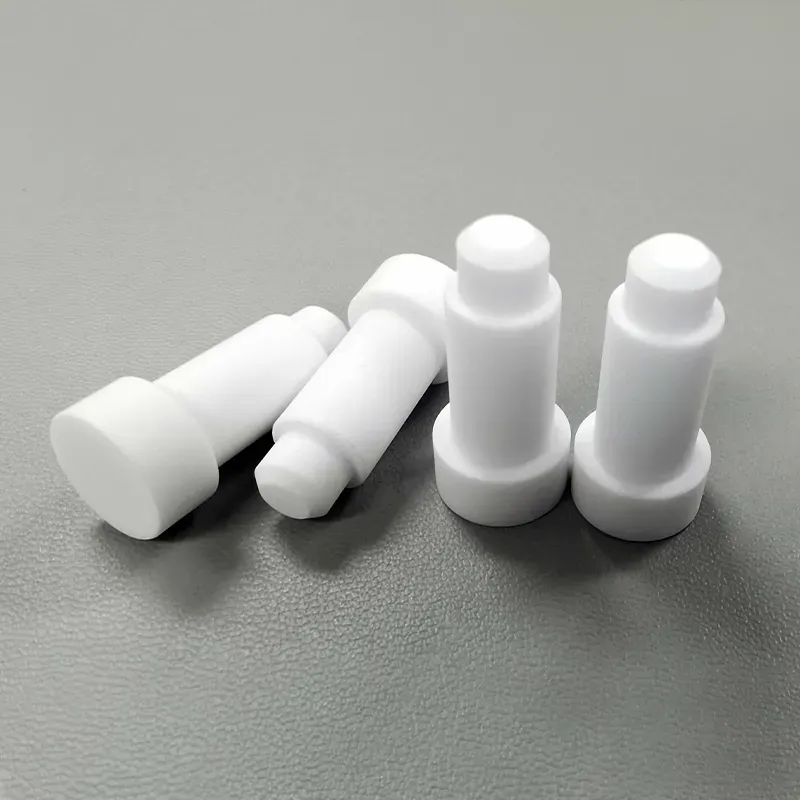
Silicon carbide ceramic tubes—especially silicon carbide thermocouple protection tubes and silicon carbide ceramic tubes for high temperature—are standard in lab and industrial furnaces. Even in consumer goods, you’ll find silicon carbide ceramic baking dishes, silicon carbide ceramic dinner plates, and silicon carbide ceramic serving bowls prized for their durability and heat retention.
Meanwhile, components like silicon carbide discs, silicon carbide ceramic grinding discs, and silicon carbide diamond grinding discs for pottery showcase its abrasive prowess. And in plumbing, silicon carbide ceramic disc taps and silicon carbide ceramic disk taps leverage its wear resistance for leak-free, long-life valves.
5. The Future of High-Purity Crucibles
As demand surges for wide-bandgap semiconductors like silicon carbide itself (used in EV inverters and 5G infrastructure), the need for ultra-clean, reusable crucibles is intensifying. Manufacturers are now developing coated silicon carbide crucibles with even lower impurity profiles, pushing the boundaries of what’s possible in crystal growth.
Some research labs are experimenting with hybrid designs—combining silicon carbide crucibles with silicon nitride ceramic liners—but these remain experimental. For now, the silicon carbide crucible remains irreplaceable in high-yield, industrial-scale semiconductor production.
6. Conclusion
From powering the chips in your smartphone to enabling next-gen clean energy tech, the humble silicon carbide crucible plays an outsized role in modern innovation. Its unique blend of thermal, chemical, and mechanical properties makes it not just useful—but essential—in one of the most demanding manufacturing processes on Earth. As global semiconductor supply chains evolve, expect this unassuming ceramic component to stay firmly at the center of the action.
Our Website founded on October 17, 2012, is a high-tech enterprise committed to the research and development, production, processing, sales and technical services of ceramic relative materials such as Why. Our products includes but not limited to Boron Carbide Ceramic Products, Boron Nitride Ceramic Products, Silicon Carbide Ceramic Products, Silicon Nitride Ceramic Products, Zirconium Dioxide Ceramic Products, etc. If you are interested, please feel free to contact us.