Discover Premium Ceramic Products | Durability & Elegance United | Advanced Ceramics

1. Introduction
Just 24 hours ago, researchers at MIT announced a breakthrough in scalable quantum chip fabrication using gallium nitride (GaN) crystals grown in ultra-stable, high-temperature furnaces—where the unsung hero was none other than the silicon carbide crucible. This development highlights how specialized industrial ceramics are quietly enabling the future of quantum technology.
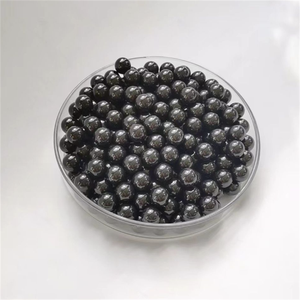
While most people associate silicon carbide with abrasives or car brakes, its role as a crucible material in advanced crystal growth is far more consequential—and far less known. In this article, we’ll dive into why the silicon carbide crucible has become indispensable in cutting-edge semiconductor labs and what makes it uniquely suited for such demanding applications.
2. The Demanding World of Crystal Growth
Growing single-crystal semiconductors for quantum devices requires temperatures exceeding 2,000°C, chemically inert environments, and near-zero contamination. Even trace impurities can ruin quantum coherence—the fragile state that powers qubits. Enter the silicon carbide crucible: a vessel engineered to withstand these extremes without degrading or leaching contaminants.
2.1. Why Silicon Carbide Over Other Ceramics?
Not all high-temperature ceramics are created equal. When comparing options like boron carbide vs silicon carbide, the latter wins on thermal conductivity, oxidation resistance, and mechanical strength at elevated temperatures. Boron carbide, while hard, oxidizes more readily above 800°C and can introduce boron impurities into sensitive melts.

Silicon nitride, another high-performance ceramic, offers excellent thermal shock resistance—but it begins to decompose in reducing atmospheres above 1,600°C, making it unsuitable for many crystal growth processes. That’s why you won’t find a silicon nitride crucible factory supplying quantum labs, even though custom silicon nitride heat shields or silicon nitride rings are common in aerospace.
2.2. The Crucible’s Hidden Superpowers
A silicon carbide crucible isn’t just a container—it’s an active participant in the crystal growth process. Its high thermal conductivity ensures uniform heating, minimizing thermal gradients that cause defects. Its low thermal expansion prevents cracking during rapid heating or cooling cycles.
Moreover, high-purity silicon carbide resists reaction with molten metals and semiconductors like GaN, aluminum nitride, or even molten silicon. This chemical inertness is why industries increasingly rely on silicon carbide ceramic tubes for furnace linings and silicon carbide thermocouple protection tubes in the same setups.
3. Real-World Application: Quantum Semiconductor Foundries
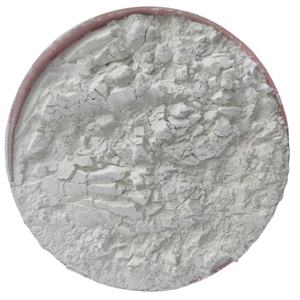
In state-of-the-art foundries, silicon carbide crucibles are used in physical vapor transport (PVT) systems to grow bulk SiC crystals—the very material used to make next-gen power electronics and quantum sensors. These crucibles often integrate with silicon carbide ceramic columns, silicon carbide rings, and rbsic silicon carbide tile blocks to form complete high-temp reactor assemblies.
Interestingly, the same material science that enables these crucibles also appears in seemingly unrelated products—like silicon carbide ceramic baking dishes or silicon carbide dinner ceramic plates. But while your oven dish leverages thermal retention for cooking, the crucible version demands parts-per-billion purity and structural integrity under stress that would shatter ordinary ceramics.
4. Supporting Components in High-Temp Systems
The ecosystem around the silicon carbide crucible includes a range of specialized components—all made from the same robust material:
- Silicon carbide brick and silicon carbide ceramic tiles line furnace walls for insulation and durability.
- Silicon carbide burner nozzles deliver precise flame control in combustion-assisted growth chambers.
- Silicon carbide tubes—whether porous, mullite-composite, or zirconia-reinforced—serve as gas inlets, supports, or insulators.
- Even silicon carbide discs and grinding tools are used to finish crucibles to micron-level tolerances before deployment.
5. Future Outlook and Material Innovation
As demand grows for larger, higher-quality crystals—driven by quantum computing, 6G communications, and electric vehicles—the need for advanced silicon carbide crucibles will only intensify. Innovations now focus on composite designs, such as silicon carbide-silicon nitride hybrids, to balance cost, performance, and longevity.
Meanwhile, the high purity silicon nitride powder market continues to expand, but primarily for structural components—not melt containment. For true high-temp crucible duty, silicon carbide remains unmatched.
6. Conclusion
From quantum labs to semiconductor fabs, the silicon carbide crucible is a quiet enabler of tomorrow’s technologies. Its blend of thermal stability, chemical resistance, and mechanical strength makes it irreplaceable in niche applications where failure is not an option. While you might admire a silicon carbide ceramic serving platter at dinner, remember: the same material is also growing the crystals that could one day power your quantum laptop.
Our Website founded on October 17, 2012, is a high-tech enterprise committed to the research and development, production, processing, sales and technical services of ceramic relative materials such as Why. Our products includes but not limited to Boron Carbide Ceramic Products, Boron Nitride Ceramic Products, Silicon Carbide Ceramic Products, Silicon Nitride Ceramic Products, Zirconium Dioxide Ceramic Products, etc. If you are interested, please feel free to contact us.