Discover Premium Ceramic Products | Durability & Elegance United | Advanced Ceramics

1. Introduction
In the past 48 hours, a breakthrough in high-temperature crucible technology has emerged: researchers at a leading European materials institute have developed a nano-coated silicon carbide crucible that significantly reduces metal contamination during rare-earth alloy melting. This innovation underscores the ongoing relevance and adaptability of silicon carbide in extreme thermal environments. As industries push for purer melts and longer equipment lifespans, the silicon carbide crucible remains a cornerstone of high-performance refractory solutions.
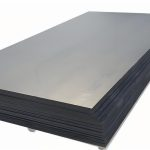
Silicon carbide crucibles are prized for their exceptional thermal conductivity, chemical inertness, and resistance to thermal shock. Unlike conventional clay-graphite or alumina crucibles, silicon carbide maintains structural integrity at temperatures exceeding 1600°C, making it indispensable in foundries, laboratories, and advanced ceramics manufacturing.
2. Material Comparison: Silicon Carbide vs. Silicon Nitride vs. Boron Carbide
When selecting refractory materials for crucibles, engineers often weigh silicon carbide against silicon nitride and boron carbide. Each offers distinct advantages depending on the application environment.
- Silicon carbide excels in thermal conductivity (up to 120 W/m·K) and oxidation resistance, ideal for repeated heating cycles in air or inert atmospheres.
- Silicon nitride, while less thermally conductive, offers superior fracture toughness and creep resistance at ultra-high temperatures (>1700°C), making it suitable for specialized aerospace and semiconductor applications. However, silicon nitride crucible factories are fewer and costs are significantly higher.
- Boron carbide vs silicon carbide reveals a trade-off: boron carbide has higher hardness and neutron absorption (useful in nuclear applications), but it oxidizes more readily above 800°C and is far more expensive.
For most industrial melting tasks—especially aluminum, copper, and precious metals—the silicon carbide crucible strikes the optimal balance of cost, durability, and performance.
3. Manufacturing Methods and Structural Variants
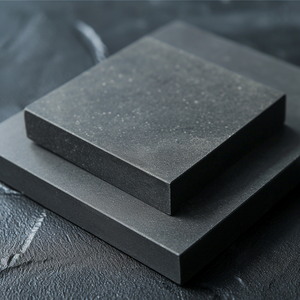
Silicon carbide crucibles are typically produced via reaction bonding (RBSiC), sintering, or nitride bonding. Reaction-bonded silicon carbide (RBSiC) crucibles, often derived from rbsic silicon carbide tile block precursors, offer near-net-shape fabrication with minimal shrinkage and excellent dimensional stability.
Sintered silicon carbide crucibles provide higher purity and density, crucial for semiconductor or optical glass melting, but require costly high-pressure sintering equipment. Nitride-bonded variants offer good thermal shock resistance but lower strength.
Beyond crucibles, the same material science principles apply to related products: silicon carbide ceramic columns support high-load furnace structures; silicon carbide ring and silicon carbide burner nozzles endure corrosive combustion environments; and silicon carbide brick lines industrial kilns for longevity.
4. Applications Beyond Metallurgy: From Tubes to Tableware

The versatility of silicon carbide extends far beyond crucibles. In high-temperature process engineering, silicon carbide tube furnace components—including silicon carbide thermocouple protection tubes, silicon carbide ceramic tube for furnace, and silicon carbide porous ceramic tube—are standard due to their resistance to molten salts and aggressive gases.
Interestingly, the same material appears in consumer goods. Products like silicon carbide ceramic baking dish, silicon carbide ceramic dinner plates, and silicon carbide ceramic serving bowls leverage the material’s thermal shock resistance for oven-to-table use. Brands offering silicon carbide baking dish staub-style designs or silicon carbide ceramic casserole dish with lid highlight its aesthetic and functional duality.
Even niche items—such as silicon carbide ceramic plates for painting, silicon carbide ceramic childrens plates, or silicon carbide christmas ceramic platter—demonstrate market diversification. Meanwhile, industrial components like silicon carbide discs, silicon carbide ceramic grinding disc, and silicon carbide ceramic disk tap utilize the material’s hardness for wear resistance.
5. Performance Limitations and Emerging Alternatives
Despite its strengths, silicon carbide crucibles are not universally ideal. In highly reducing atmospheres or when melting reactive metals like titanium, silicon carbide can decompose or contaminate the melt. Here, alternatives like high purity silicon nitride powder market-derived silicon nitride crucibles or custom silicon nitride heat shield components may be preferred.
Additionally, while silicon carbide ceramic pipes and silicon carbide ceramic plumbing pipe offer corrosion resistance, they are brittle compared to metal alloys and require careful handling. The development of silicon carbide zirconia tubes aims to mitigate this by enhancing toughness through composite design.
6. Conclusion
The silicon carbide crucible remains the gold standard for high-temperature, high-cycle industrial melting due to its unmatched combination of thermal conductivity, chemical stability, and cost-effectiveness. While silicon nitride and boron carbide serve critical roles in niche applications, silicon carbide’s adaptability—from rbsic silicon carbide tile block furnace linings to silicon carbide ceramic dinnerware—cements its position across both industrial and consumer markets. As coating technologies and composite formulations evolve, the performance envelope of silicon carbide crucibles will only expand further.
Our Website founded on October 17, 2012, is a high-tech enterprise committed to the research and development, production, processing, sales and technical services of ceramic relative materials such as Why. Our products includes but not limited to Boron Carbide Ceramic Products, Boron Nitride Ceramic Products, Silicon Carbide Ceramic Products, Silicon Nitride Ceramic Products, Zirconium Dioxide Ceramic Products, etc. If you are interested, please feel free to contact us.