Discover Premium Ceramic Products | Durability & Elegance United | Advanced Ceramics

PRODUCT PARAMETERS
Description
Overview of Silicon Nitride Sic Beo Aluminum Nitride Zirconia Boron Nitride Alumina Ceramic Guard Tube for Protection Thermocouple
Aluminum Nitride Ceramic is an advanced ceramic material with aluminum nitride as the main component. It has been widely used in electronics, optics, and mechanics due to its unique properties.
Features of Silicon Nitride Sic Beo Aluminum Nitride Zirconia Boron Nitride Alumina Ceramic Guard Tube for Protection Thermocouple
High thermal conductivity: Aluminum nitride ceramics have relatively high thermal conductivity, usually between 170-260 W/m·K, which makes it an excellent heat dissipation material. It is especially suitable for electronic devices that require efficient heat dissipation, such as substrate materials for power semiconductor devices.
Good electrical insulation: Despite its high thermal conductivity, aluminum nitride ceramics are excellent insulators of electricity, which can effectively prevent current leakage and ensure the safe operation of electronic components.
Low dielectric constant and dielectric loss: These characteristics make aluminum nitride ceramics very suitable for use in high-frequency circuits because it can reduce energy loss during signal transmission.
High temperature resistance: Aluminum nitride ceramics can maintain structural stability and strength at extremely high temperatures. Its melting point is about 2800°C, so it is suitable for applications in high temperature environments.
Low thermal expansion coefficient: Compared with semiconductor materials such as silicon, aluminum nitride has a lower thermal expansion coefficient, which means it has better dimensional stability when the temperature changes, which helps improve packaging reliability.
Corrosion resistance: Aluminum nitride ceramics have good chemical stability to most molten metals and are not easily oxidized or corroded, allowing them to perform well in harsh environments.
High mechanical strength: Although not as hard as some other types of ceramic materials, aluminum nitride ceramics still provide enough mechanical strength to allow them to be used in many structural applications.
(Silicon Nitride Sic Beo Aluminum Nitride Zirconia Boron Nitride Alumina Ceramic Guard Tube for Protection Thermocouple)
Specifications of Silicon Nitride Sic Beo Aluminum Nitride Zirconia Boron Nitride Alumina Ceramic Guard Tube for Protection Thermocouple
Thermocouples measure temperature in tough places. They need strong protection. Ceramic guard tubes shield them. Different ceramic materials handle different jobs. Each material has special strengths. Choose the right one for your furnace or process.
Silicon nitride ceramic is very hard. It resists heat shock extremely well. This means it won’t crack easily when temperatures change fast. It handles high temperatures smoothly. Silicon carbide ceramic is also tough. It fights corrosion and wear effectively. It works well against chemical attack. It’s good for long life in harsh conditions.
Beryllium oxide ceramic moves heat very fast. This is important for quick temperature readings. But be careful. Beryllium oxide dust is toxic. Handle it safely during installation. Aluminum nitride ceramic also moves heat well. It also blocks electricity. This electrical insulation is useful in many applications.
Zirconia ceramic is strong. It resists cracks under stress. It handles big temperature jumps reliably. Boron nitride ceramic releases easily from molds. It machines well. It offers good heat movement and electrical insulation too. Alumina ceramic is the common choice. It gives good overall performance. It resists heat and chemicals decently. It costs less than many others.
These ceramic tubes see extreme heat. They face corrosive gases. They deal with molten metal splash. Standard metal sheaths fail quickly here. Ceramic guard tubes last much longer. They keep the thermocouple sensor safe inside. This protection means accurate temperature readings. Accurate readings are vital for process control. They save energy and improve product quality.
The best material depends on your specific needs. Consider the maximum temperature. Think about the atmosphere. Is it oxidizing or reducing? Are corrosive chemicals present? How fast do temperatures change? Is rapid heat transfer critical? Answering these questions points to the right ceramic.
(Silicon Nitride Sic Beo Aluminum Nitride Zirconia Boron Nitride Alumina Ceramic Guard Tube for Protection Thermocouple)
Applications of Silicon Nitride Sic Beo Aluminum Nitride Zirconia Boron Nitride Alumina Ceramic Guard Tube for Protection Thermocouple
Thermocouples measure extreme heat. They need strong protection. Ceramic guard tubes provide this shield. Different ceramic materials work best for different tough jobs. Choosing the right tube matters.
Silicon nitride ceramic tubes handle very high temperatures well. They resist wear and tear. They are good for molten metal handling. Foundries and steel plants use them. Silicon carbide tubes are also tough against heat and wear. They work well in furnaces and kilns. They last a long time under stress.
Beryllium oxide ceramic tubes move heat away fast. This is important for accurate temperature readings. They are used where precise control is critical. But safety handling is vital because of the material. Aluminum nitride tubes also move heat well. They are safe to handle. They are common in electronics and semiconductor making.
Zirconia ceramic tubes resist sudden temperature changes. They stop cracking from thermal shock. This makes them perfect for processes with quick heating and cooling cycles. Boron nitride tubes are slippery. Molten metal does not stick to them. This is essential for clean temperature measurement in metal processing. Alumina ceramic tubes are widely used. They offer good overall performance. They resist heat and chemicals. They are cost-effective for many general industrial uses.
These ceramic tubes protect the thermocouple sensor inside. They stop direct contact with harsh materials like molten metal or corrosive chemicals. They prevent physical damage from impacts or abrasion. They ensure the thermocouple gives stable and reliable readings. This protection is vital for process control and safety.
Industries like metal casting, chemical production, power generation, and glass making rely on these tubes. Each ceramic type solves a specific problem. The right guard tube extends thermocouple life. It improves measurement accuracy. It reduces downtime and maintenance costs. Selecting the best material depends on the application’s temperature, environment, and chemical exposure.

Company Introduction
Advanced Ceramics founded on October 17, 2014, is a high-tech enterprise committed to the research and development, production, processing, sales and technical services of ceramic relative materials and products.. Since its establishment in 2014, the company has been committed to providing customers with the best products and services, and has become a leader in the industry through continuous technological innovation and strict quality management.
Our products includes but not limited to Silicon carbide ceramic products, Boron Carbide Ceramic Products, Boron Nitride Ceramic Products, Silicon Carbide Ceramic Products, Silicon Nitride Ceramic Products, Zirconium Dioxide Ceramic Products, Quartz Products, etc. Please feel free to contact us.
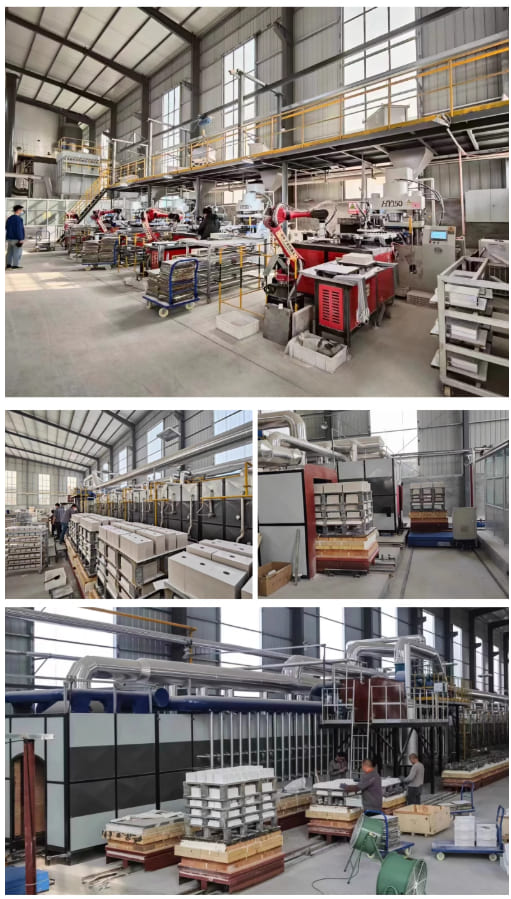
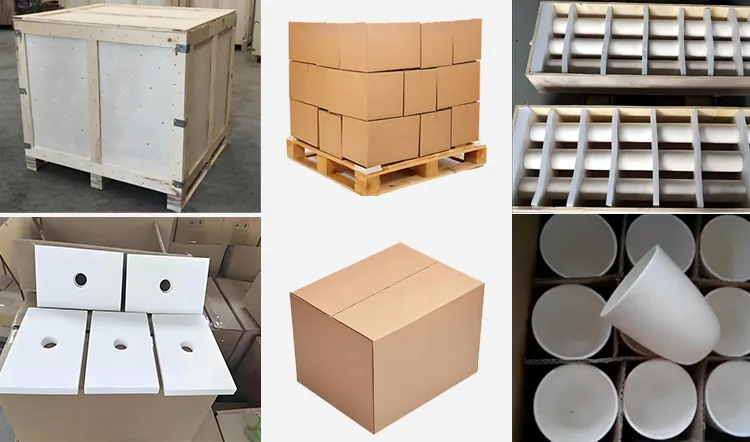
Payment Methods
T/T, Western Union, Paypal, Credit Card etc.
Shipment Methods
By air, by sea, by express, as customers request.
5 FAQs of Silicon Nitride Sic Beo Aluminum Nitride Zirconia Boron Nitride Alumina Ceramic Guard Tube for Protection Thermocouple
Thermocouples measure temperature in tough places. Protective ceramic guard tubes shield them. Here are five common questions about these tubes.
What do these ceramic tubes do? They cover the thermocouple. This keeps it safe from harsh chemicals, extreme heat, and physical hits. The thermocouple lasts much longer. Your readings stay accurate.
Why use ceramics instead of metal? Ceramics handle much higher heat. They don’t melt or warp easily. Ceramics resist chemical attack far better than most metals. They also insulate well electrically. This is vital in many industrial settings.
How do I pick the right ceramic material? Different ceramics offer different strengths. Alumina is cost-effective and widely used. Silicon Nitride and Boron Nitride handle extreme heat and thermal shock superbly. Zirconia offers great toughness. Silicon Carbide resists wear and corrosion well. Aluminum Nitride conducts heat effectively. Beryllia Oxide also conducts heat well but needs careful handling. Match the material to your specific temperature, chemical, and physical stress needs.
How hot can these tubes get? Each material has a maximum temperature limit. Alumina typically works up to about 1700°C. Silicon Nitride and Boron Nitride withstand over 1800°C. Zirconia handles around 2000°C. Silicon Carbide is good to about 1600°C in air. Aluminum Nitride works near 1800°C. Beryllia Oxide is stable around 1800°C. Know your process temperature first.
How do I install the thermocouple inside the tube? Slide the thermocouple carefully into the tube. Ensure the tip reaches the bottom. Seal the open end properly. Use a compatible ceramic cement or compression fitting. This seals out harmful gases or liquids. It prevents air flow affecting the reading. Good installation is key for protection and accuracy.
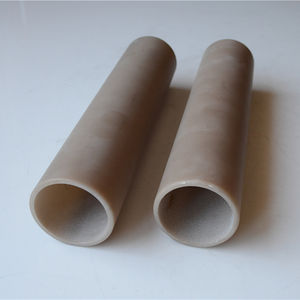
(Silicon Nitride Sic Beo Aluminum Nitride Zirconia Boron Nitride Alumina Ceramic Guard Tube for Protection Thermocouple)
REQUEST A QUOTE
RELATED PRODUCTS
Customizable Low Cte High-Temperature Resistant Dbc Precision Laser Cutting Aln Aluminum Nitride Ceramic Substrate for RF Amplifiers
Aluminum Nitride Ceramic AlN Powder CAS 24304-00-5 High Thermal Conductivity for Diverse Industrial Applications
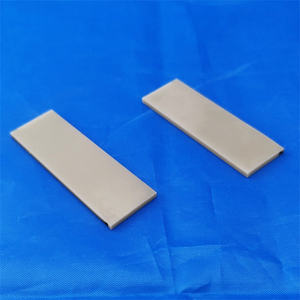
Custom Shape ALN Aluminum Nitride Ceramic Sheet Plate Substrates
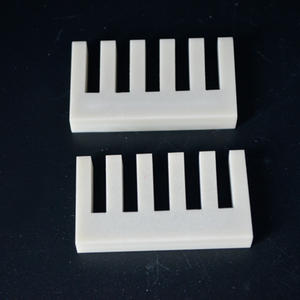
180W/mk High Thermal Conductivity Aluminum Nitride Ceramic Pad AIN ALN Ceramic Sheet for IC MOS Tube/IGBT Chip
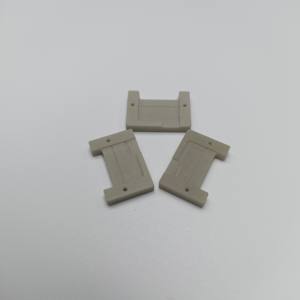
High Thermal Conductivity Aluminum Nitride Ceramic Sheet